
ABOUT US.
The Dr. Rau Foundation was established in Switzerland in 1989 by Dr. G. Rau. The philanthropist and doctor recognized the urgent needs of children in the Third World and bequeathed his fortune to the Dr. Rau Foundation.
Training and education of responsibility.
Training and education in responsibility
awareness.
After starting in 2012 with a wheelchair workshop, the RES (Rehabilitation, Economic Empowerment and Sports) project expanded the range of services in various directions. Our basic attitude is respectful encounters at eye level.
Geographic definition.
The Dr. Rau Foundation essentially supports projects in Third World countries, mainly in Central Africa, Asia, and South America. The Dr. Rau Foundation attaches the utmost importance to the complete elimination of corruption in its grants and rigorously controls the flow of funds. It is reluctant to make awards in war zones.
OUR TOPICS.
The Foundation serves to support the basic needs of the underprivileged strata of the population in the Third World, primarily by providing funds for the sick, for the prevention of disease, for the promotion of family planning, for the emancipation of women and for primary education.
The focus is on:
OUR BOARD OF TRUSTEES.
The Board of Trustees is made up of the following persons:
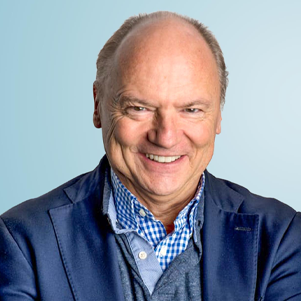
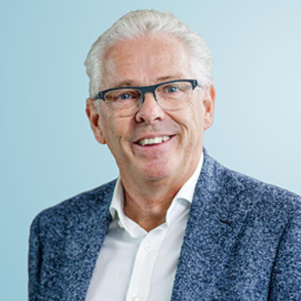
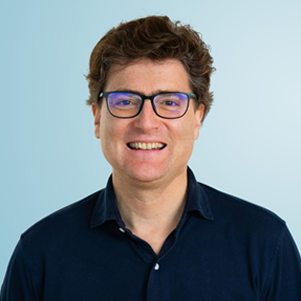
Corporate Governance.
The Dr. Rau Foundation is subject to foundation supervision by the Federal Department of Home Affairs, which conducts an annual audit of the Foundation. The auditing company is Schweizerische Treuhandgesellschaft, 8006 Zurich.
BIOGRAPHY OF DR. GUSTAV RAU – A LIFE DEDICATED TO CHILDREN AND ART.
Dr. Gustav Rau (1922–2002) dedicated his life to needy children in Africa and to art. The son of an industrialist family, he studied economics before joining his father’s successful company. But at the age of 40, his focus shifted when he began studying tropical medicine and pediatrics, in addition to managing the inherited factory. Finally, Dr. Rau sold the company and dedicated his life to two new passions – art and helping others.
He donated his unique art collection to UNICEF in order to keep on making a contribution to the poorest of the poor even after his death.
Early years.
At first it looked as though Gustav Paul Ludwig Rau, born in Stuttgart on January 21, 1922, would follow in the footsteps of his father Gustav Rau, who had turned the SWF special tool factory into a successful automotive supplier. According to his contemporaries, Gustav, who was the sole heir, described his childhood and youth as a happy time. From his mother Elisabeth, née Wieland, daughter of a professor of harp in Antwerp, he had inherited his love of art. He initially attended a reform secondary school, and in 1941, with an eye on starting work at father’s company, he took his Abitur at a commercial high school in Stuttgart.
In 1942, the economics student reluctantly followed the draft into the German Armed Forces. Like his father, Rau deplored the Nazi regime and the war started by Germany. He confided to his friend Werner Kohlheim that he planned to desert at the very first opportunity. His duties as a soldier were limited to clerical and interpreting work. In 1944 he surrendered to the British Army in the Netherlands and became a prisoner of war.
After his release, Gustav Rau resumed his studies in 1947. He wrote a dissertation on “The Derivation of the Socialist Concept of Property from the Ethical Postulates of Freedom, Justice, and Community” and received his doctorate in 1950 from the Institute of Political Science and the University of Tübingen. Together with his father, he managed the automotive supplier SWF in Bietigheim, but more with his head than with his heart. After the death of his parents, he finally set out on his own path from 1963 onwards, studying medicine and obtaining his doctorate in 1970, which led him to needy children in the heart of Africa.
As a doctor in Africa.
Rau’s role model was humanitarian Albert Schweitzer, whom he had visited in Lambaréné, Gabon, shortly before his death. In 1972, Rau sold his parents’ company to an American corporation. The sale brought in 443 million German marks and the freedom to turn a lifelong dream into reality. In 1974, he made his first visit to Nigeria, where he worked as a doctor at the Sacred Heart Hospital in Abeokuta. “Almost nothing can be compared with European conditions. Circulatory diseases don’t seem to exist here (even my blood pressure has already dropped to a subnormal level),” Rau reported from Abeokuta on September 14, 1974. “You might think that Africans don’t have appendicitis, dermatoses present themselves very differently on black velvety skin than on light skin (we whites, around 20 in total in the whole of Abeokuta with its 100,000 inhabitants, are referred to by the locals as “people without skin”), Mrs. Anopheles sees everyone in this hyper-endemic region at least once a day (malaria prophylactics are advertised here like beer). Gonorrhea is a widespread disease, which is why ectopic pregnancies are a daily occurrence. Poor nutrition plays a massive role in the suffering of the people here, and infant mortality is still huge.”
The realization of a lifelong goal.
Rau wanted to build a hospital for the poorest of the poor himself, “according to his own plans and with his own hands.” In the east of what was then Zaire (now the Democratic Republic of Congo), his dream became reality. Impressed by reports of the mountainous landscape of Kivu, he arrived in Ciriri, Bukavu Province, located high above Lake Kivu, in January 1977. In 1979, he received permission to build a hospital there. Construction work began in 1980 and the first buildings – with a floor area of 4,000 m² – were inaugurated by the governor of the region on November 23, 1983 with the opening of the children’s ward.
Alleviating the plight of the people, especially due to the widespread chronic malnutrition, became Rau’s motivating concern. By November 1988, two physicians, five nurses, five attendants, and 18 other general service employees were working at the hospital. On average, 2,000 adults and children were treated here each year and 8,000 people were provided with food and medicine every day. When the civil war broke out in neighboring Rwanda, the number of people seeking help rose to 15,000 at times.
Helping wherever we can.
At the affiliated nutrition center, Rau led the fight against hunger with great success – as early as 1989, malnutrition was considered to have been defeated in the region. In particular, the distribution of milk porridge for children proved to be extremely effective. A report in November 1988 stated that “within a two-hour walk, there are virtually no more malnourished children in need of hospital treatment.”
The young patients stayed in the hospital for three to four months to gain 3–5 kilograms. Sugar was strictly banned from their diet and replaced by bananas because they were more nutritious and could be produced locally, even at 1,900 meters above sea level. A typical daily menu looked like this: corn porridge in the morning, followed by bananas; milk with bananas at ten o’clock; standard porridge of one-third corn, one-third beans, and one-third vegetables plus bananas at noon; standard porridge plus bananas in the evening. Severe cases additionally received a liquid porridge for rehydration, depending on individual symptoms. The recipe is handed down in a report on the work of the hospital: 1 kilogram ripe mashed bananas mixed with 1 liter water, plus 7 grams of kitchen salt and 5 grams of bicarbonate of soda. Many patients also suffered from worm diseases (80%), malaria (20%), anemia (10%), dehydration (4%), and skin diseases and conjunctivitis.
In order to improve the situation of the people in the region in the long term, Rau ensured that 30,000 children were able to go to school and provided vaccinations for the entire population. Needy families received tuition reimbursement up to the sixth grade. In addition, a library and a study room were established on the hospital grounds. Every Wednesday and Saturday, women were taught about education and hygiene. Family planning was also an issue. Help was also found for diabetics, for whom Rau provided insulin. “No one can afford to buy the required drugs at the pharmacy anymore, with the insane prices they charge for them there. We give them away for free, especially to teenage diabetics who can’t live without them.”
The hospital in Ciriri today.
Today, the hospital in Ciriri acts as a reference hospital for the entire South Kivu region and is also responsible for 34 health stations in the surrounding area. Around 215,000 people live in the catchment area of the 130-bed hospital. Some 8,500 people are treated here as outpatients every year. It is run by the Archdiocese of Bukavu.
“He was never boring.”
Despite his wealth, Rau lived a secluded and modest life. Hans Kohlheim, whose father was a friend of Rau, describes him as a man with the stature of a giant, impulsive, laughing uproariously, sometimes loudly singing a popular song, and often driven by restlessness. Some people could find him exhausting, not least because of his wilfulness. Without this, however, it is unlikely that he would have achieved his life’s work. Kohlheim also admired Rau for his cosmopolitanism and politeness. “Children liked chatting to him, and he never bored them either.”
Pomp and ostentation were abhorrent to Rau, an inveterate humanist. Nevertheless, he afforded himself one luxury: he collected art. Visiting museums with his parents had awakened his love for painting, especially sculpture and Dutch and Flemish masters.
In 1958, he laid the foundation for his own collection and purchased his first painting in Stuttgart’s Kunsthaus Bühler: “The Cook” by Dutch painter Gerard Dou. He had caught the collecting bug. From his hospital in Ciriri, he traveled to auctions in Paris, London, and New York. Gradually, one of the most extraordinary private collections in the world was created. Rau acquired at least 2,200 art objects over the years – many of which he sold again when he needed money for his work in Africa or when he was no longer interested in certain areas of the collection.
People always come first.
At the Embraport bonded warehouse near Zurich Airport, Rau’s paintings were stored in an underground vault, hidden from public view for years. He gave up the idea of building a museum in Marseille – the “gateway to Africa” – or at least an exhibition hall in Embrach, Switzerland. His endeavors in Africa came first.
“On January 1, I made a final decision regarding the continuation of things in Marseille and Embrach,” he wrote from Bukavu to his confidants on January 4, 1990. “It was storming and raining outside, and extremely cold. Once again, we again had around 10,000 out-of-towners in for dinner (in addition to our inpatients), which is served daily between 6 am and 4.30 pm (cooking is 24/7). I decided to stop all my work in Marseille and sell all my art treasures in order to make the proceeds available to people here (or elsewhere in the Third World), preferably while I was still alive. If I did anything else, I would feel guilty.” And he added, “I would feel guilty all the rest of my days; the hardship here is simply indescribable.”
Beyond Africa.
Rau’s own illness and the civil war in Congo made it impossible for him to stay in Africa any longer. On January 12, 1991, he wrote: “I no longer wish to go on with this gypsy way of life (split between Africa and Europe, due to an existential decision) without a compelling reason. On my return to Bukavu I found a catastrophic situation. The prices are climbing like crazy. In the city, people are surprised that we can still keep up with our constantly increasing number of beneficiaries. In a few days there will be a war. Terrible things will happen – and the consequences are still unforeseeable. In this city, many shop windows are blocked up with emergency bricks. Medicines are almost nonexistent.” In 1993, he left Ciriri with a heavy heart and moved to Monaco.
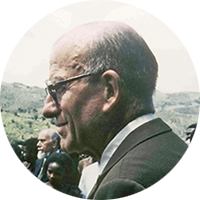
© UNICEF – Gustav Rau on a visit to Africa in the early 1970s.

